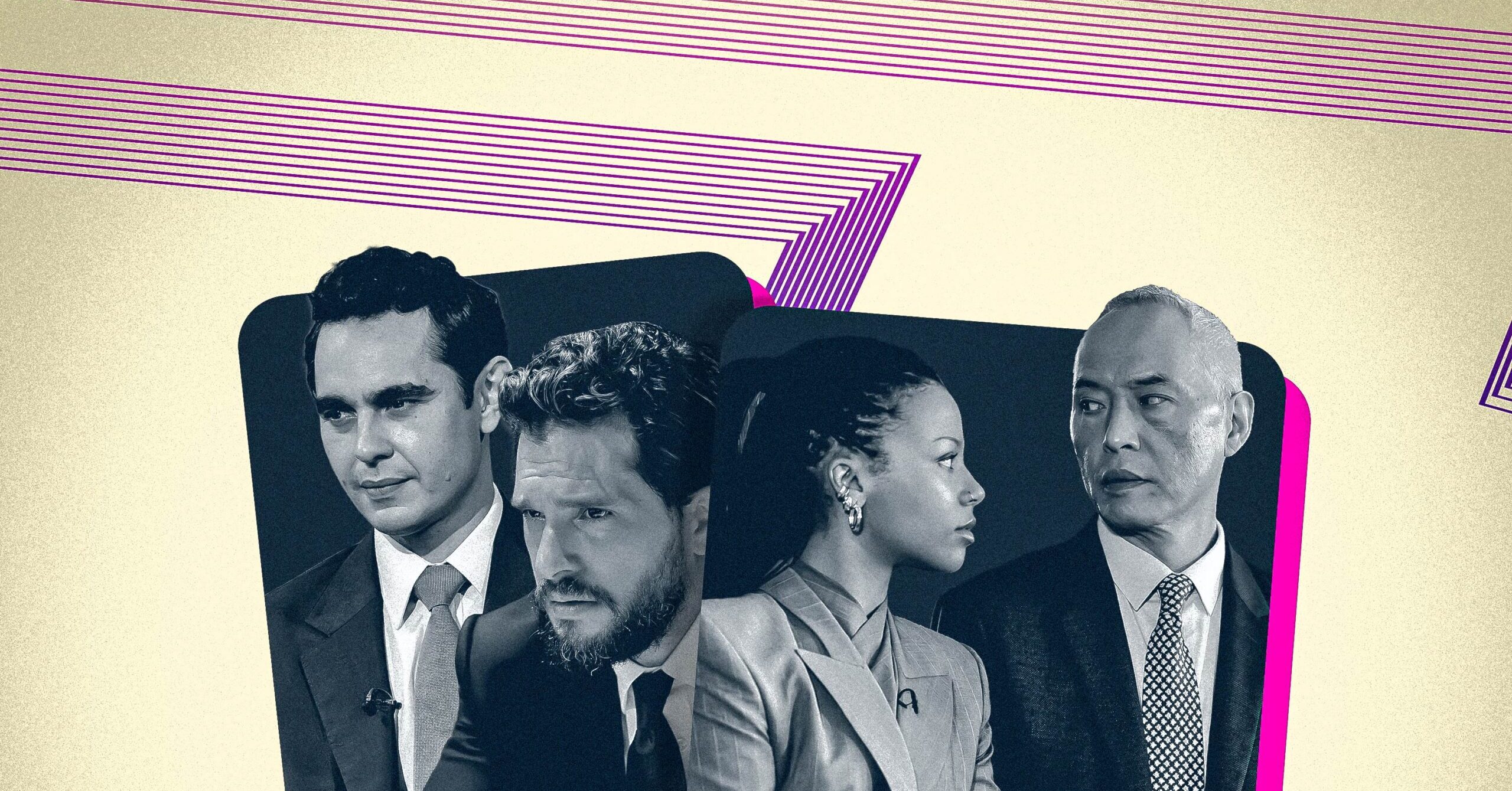
Industry Season 4 Episode 6: Did Dear Henry Underdeliver on Whitney & Henry?
Industry Season 4 Episode 6, aptly titled “Dear Henry,” plunged viewers deeper into the chaotic, cutthroat world of Pierpoint & Co. with a distinct sense of unease. From its opening moments, the episode felt less like a steady progression and more like a fever dream, hurtling us towards what promises to be an outrageous, perhaps even destructive, climax. While *Industry* has always excelled at pushing boundaries and keeping its audience on edge, many viewers were left pondering a crucial question: did the much-anticipated Whitney and Henry dynamic, particularly its homoerotic undertones, ultimately underdeliver on its significant buildup?
The Shifting Sands of Industry: A Series in Flux
The landscape of *Industry* in Season 4 Episode 6 felt as if a house of cards was finally beginning its inevitable collapse. The transition from the previous episode was undeniably jarring, leaving some viewers feeling as though crucial pieces of the narrative puzzle were missing or perhaps left on the cutting room floor. This narrative choppiness wasn't just stylistic; it contributed to a broader sense of disquiet that permeated the episode.
One noticeable aspect contributing to this feeling was the strangely anti-climactic sendoff for Rishi. A character who had become deeply integral to the very fabric of the series, his departure, and the subsequent reaction to it, felt surprisingly unfulfilling. While the unfolding drama surrounding Tender and the relentless pursuit of truth made it easy to somewhat overlook this narrative oversight, it set a precedent for a particular kind of expectation versus reality that would manifest elsewhere in the episode. The stage was set for high stakes, but the execution sometimes felt oddly muted, even for a show renowned for its intensity.
Whitney and Henry: A Promise of Raw Connection Unfulfilled?
Undoubtedly, one of the most compelling and discussed elements leading into *Industry Season 4 Episode 6 Dear Henry* was the simmering, undeniable homoerotic tension between Whitney and Henry. For seasons, Whitney has been drawn to Henry with an almost moth-to-a-flame intensity, seemingly harboring deep desires for the man who embodies old money, titles, and a particular blend of darkness and earnestness. Henry’s appeal lies in this fascinating duality: his inherent depravity juxtaposed with an unusual, almost naive innocence, and his high standing and power that he appears utterly incapable of wielding effectively. For someone like Whitney, lacking such inherited privilege, this dynamic is both infuriating and undeniably captivating.
The episode started with a tantalizing tease of this dynamic’s erotic potential. Whitney, peering at Henry in the shower, evoked comparisons to the obsessive Joe Goldberg, and their subsequent debauchery at the gay club was intense and visually striking. Henry’s explicit encounter in a glory hole and a threesome might seem, on the surface, anything but "tame." Yet, despite the fantastically edited sequences and explicit acts, there was a pervading sense among some viewers that *Industry* had, in fact, held back.
This is a show that has never shied away from letting its "freak flag fly," rarely feeling compelled to spell things out verbatim, but also rarely afraid to depict raw, unvarnished desire and consequences. For a dynamic that had been so heavily hyped, the emotional and physical payoff between Whitney and Henry felt…incomplete. The build-up of their predatory-prey dance, the calculated pursuit by Whitney, and Henry's often clueless vulnerability, seemed to promise a more direct, perhaps even destructive, physical collision between them. Instead, it was oddly contained, especially considering Henry’s full immersion into infidelity.
However, it wasn't without its deeper moments. Whitney did offer Henry a rare glimpse of vulnerability, something Henry hadn't experienced with anyone else. The scene with the flowers, intended for Henry (though he seemingly didn't grasp the significance), underscored Whitney's complex machinations. Whitney has consistently operated as a predator, meticulously spinning a web to ensnare Henry, not just sexually, but also to drive a wedge between him and Yasmin, undermining her at every turn. Since
Industry S4E6 Review: Tender's Collapse & Harper's Ruthless Play, Henry's feelings for Yasmin have been complicated, making him even more susceptible to Whitney’s insidious influence.
The Fallout from Tender and Harper's Ruthless Play
Beyond the intense personal dramas, *Industry Season 4 Episode 6 Dear Henry* also significantly advanced the corporate narrative, particularly concerning Tender's imminent collapse and the calculated moves of its key players. The episode saw a pivotal confrontation between Harper and Yasmin, a scene reminiscent of Michael Mann’s iconic diner sequence in *Heat*. Harper, ever the pragmatist, summoned Yasmin to "Death Row," not just to warn her that Tender was on the brink of collapse and that she and Henry faced personal liability, but also with an underlying motive: to manipulate Yasmin into inadvertently accelerating Tender's downfall.
Harper's stark warning about Whitney – "He is not some hobbyist sociopath. He’s a fucking criminal" – was a chilling reminder of the true stakes involved. Yasmin's well-established ego, however, often proves to be her greatest weakness, preventing her from fully grasping the extent of the danger or the ruthless efficiency of Harper's machinations. This power play sets the stage for massive financial and personal repercussions, highlighting how the cutthroat world of high finance spares no one, even those from privileged backgrounds like Yasmin. The intertwining of personal vendettas and corporate espionage continues to be a hallmark of *Industry*'s narrative brilliance.
Missed Opportunities or Strategic Subtlety? An Industry Conundrum
The sense of "something missing" or "underdelivery" in *Industry Season 4 Episode 6* sparks an interesting debate about narrative strategy. Was the seemingly restrained depiction of the Whitney and Henry dynamic, despite its explicit moments, a missed opportunity for raw, unbridled storytelling that *Industry* is known for? Or was it a deliberate, strategic choice, perhaps a form of subtle manipulation by the showrunners themselves?
*Industry* is not a show that typically needs to spell out every emotion or action for its audience. It thrives on implicit tension, unspoken desires, and the psychological undertones of its characters' interactions. Therefore, one could argue that the *frustration* of an underdelivered sexual payoff between Whitney and Henry might be precisely the intended effect. This creates a lingering sense of unfulfilled desire, mirroring the often-unrealized ambitions and connections within the characters' lives at Pierpoint. By showing the *potential* for something explosive and then pulling back, the writers might be intensifying the psychological drama, focusing on Whitney's manipulation and Henry's unwitting vulnerability, rather than a purely physical resolution. This approach allows the predatory nature of their relationship to simmer, rather than explode, potentially setting the stage for an even more devastating climax later on. For more insights into the episode's overall impact, check out
Industry S4E6 Dear Henry: A Fever Dream of Missed Moments?
Conclusion
*Industry Season 4 Episode 6 Dear Henry* was an episode brimming with high tension, complex character dynamics, and the accelerating collapse of a corporate empire. While it delivered on many fronts, from Harper's ruthless strategic moves to the tantalizing unraveling of Tender, the central question remains: did the much-anticipated, homoerotic dynamic between Whitney and Henry truly fulfill its promise? Despite explicit scenes, the nuanced, psychological buildup seemed to warrant an even more profound, perhaps more destructive, physical manifestation. Whether this was a narrative misstep or a cunningly subtle strategic choice, it undoubtedly leaves viewers yearning for more, perfectly setting the stage for the outrageous climax that *Industry* has expertly crafted throughout this tumultuous season.